Stem cell therapy targets the root causes of joint degeneration in osteoarthritis — stimulating cartilage repair, reducing inflammation and improving mobility, rather than only masking the pain. See what our regenerative protocol can offer.
Are you considering Stem Cell Treatment for Osteoarthritis?
Stem cell therapy is a promising regenerative approach that harnesses the body’s natural healing abilities to regenerate or repair damaged tissues in osteoarthritic joints. Unlike conventional treatments that primarily focus on symptom relief, stem cell therapy may address the root causes of joint degeneration by:
Stimulating cartilage repair
Reducing inflammation
Enhancing mobility and decreasing pain
Possibly delaying or reducing the need for joint replacement surgery
Early research on stem cell therapy for osteoarthritis (OA) shows promising results in alleviating symptoms and slowing cartilage breakdown, making it an attractive option for those seeking more than temporary relief.
Understanding Osteoarthritis
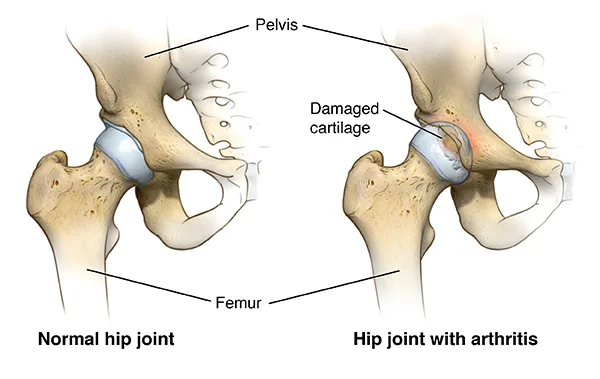
Osteoarthritis (OA) is a common degenerative joint condition characterized by the breakdown of cartilage, the smooth, protective tissue that cushions the ends of bones. As cartilage wears away, bones can begin to rub against each other, leading to pain, stiffness, and reduced mobility. OA most often affects weight-bearing joints such as the knees and hips but can occur in any joint. Typical risk factors for osteoarthritis include:
Age: Risk increases as we get older.
Weight: Excess weight adds stress to weight-bearing joints.
Genetics: Family history can predispose individuals to OA.
Joint Injury: Previous injuries may lead to faster cartilage breakdown.
Although pain medications, steroid injections, and physical therapy can help manage symptoms, they may not address the underlying cartilage damage. This has led many to explore regenerative approaches, such as stem cell therapy, to restore joint function and improve overall quality of life.
Potential Benefits of Stem Cell Treatment for Osteoarthritis
Pain Reduction Many patients report decreased joint pain and a lower reliance on pain medications. This is the most sought-after goal, and result for our patients.
Improved Mobility By reducing inflammation and promoting cartilage repair, stem cells may help restore range of motion. An increased range of motion is often paired with enhanced flexibility and greater ease in performing daily activities.
Cartilage Regeneration Certain stem cells can support the body’s natural regeneration processes in the joints.
Reduced Need for Surgery A regenerative approach may delay or lessen the need for invasive procedures like joint replacement.
Our Treatment Program in Details
01 15 to 23 Days Stay
02 IV & Intra-articular Injections
03 UCBSC / UCMSC Cells
04 Daily Therapy Program
05 120-400 Million Cells
06 Nutrition Program
Why Choose Our Stem Cell Therapy for Osteoarthritis?
Holistic Approach We combine regenerative therapies with rehabilitation, nutrition, and lifestyle guidance for comprehensive joint care.
Customized Programs Each treatment plan is tailored to your specific needs, medical history, and OA progression.
Experienced Medical Team Our physicians, therapists, and care coordinators specialize in stem cell procedures, offering personalized attention.
Cutting-Edge Facilities We follow strict safety protocols to provide the highest standard of care in cell processing.
Ongoing Support From the initial consultation to post-treatment follow-ups, our dedicated team supports you every step of the way.
Frequently Asked Questions
A.
Stem cell therapy aims to delay or reduce the need for invasive procedures, though individual outcomes vary. It’s important to maintain realistic expectations.
A.
Some patients see improvement after one round of therapy, while others may need additional sessions for optimal results. Your doctor will recommend the best schedule for you.
A.
Yes, stem cell therapy is applicable for osteoarthritis in both the knee and hip joints. Treatments are tailored to target the specific affected areas to maximize efficacy.
A.
Typically, adult mesenchymal stem cells (MSCs) derived from sources like bone marrow or adipose tissue are used for their ability to differentiate into cartilage cells and reduce inflammation.
A.
Side effects are generally minimal and may include temporary pain at the injection site, swelling, or minor infection. Severe side effects are rare when procedures are performed by qualified professionals.
A.
Unlike traditional treatments that focus on symptom management, stem cell therapy aims to regenerate damaged cartilage and reduce inflammation, potentially addressing the underlying causes of osteoarthritis and improving joint function.
A.
Typically, those with mild to moderate OA, though some with advanced OA may benefit. Eligibility depends on factors like overall health and joint damage severity.
A.
Many patients notice improvements within days and others months as results vary. Gradual benefits could continue as new tissue regenerates and inflammation subsides.
A.
Adult stem cell therapies are considered safe when performed by qualified medical professionals under strict guidelines. Discuss all risks and benefits with your doctor.
Medically reviewed by
Dr. Dina Mohyeldeen
Physician & Medical Researcher
Dr. Dina M. is a physician with particular interest in researching advancements in treating different incurable conditions. Her fields of interest include cancers, neurological, and psychiatric conditions given their difficult diagnoses and ever-evolving treatment modalities.
1.Lamo-Espinosa JM, et al. (2021). Long-term efficacy of autologous bone marrow mesenchymal stromal cells for treatment of knee osteoarthritis. Journal of Translational Medicine, 19(1), 506. https://pubmed.ncbi.nlm.nih.gov/34895259/
2.Lee WS, et al. (2019). Intra-articular injection of autologous adipose tissue-derived mesenchymal stem cells for the treatment of knee osteoarthritis: A phase IIb, randomized, placebo-controlled clinical trial. Stem Cells Translational Medicine, 8(6), 504-511. https://pubmed.ncbi.nlm.nih.gov/30835956/
3.Zhang X, et al. (2024). Efficacy and safety of mesenchymal stem cell injections for knee osteoarthritis: A systematic review and meta-analysis. Journal of Research in Medical Sciences, 29, 50. https://pubmed.ncbi.nlm.nih.gov/39629035/
4.Gadelkarim M, et al. (2022). Safety and efficacy of adipose-derived mesenchymal stem cells for knee osteoarthritis: A systematic review and meta-analysis. Joint Bone Spine, 89(5), 105404. https://pubmed.ncbi.nlm.nih.gov/35534001/
5.Song Y, et al. (2022). Mesenchymal stromal cells in osteoarthritis: Evidence for structural benefit and cartilage repair. Biomedicines, 10(6), 1278. https://pmc.ncbi.nlm.nih.gov/articles/PMC9219878/
8.Wakitani S, et al. (2004). Autologous bone marrow stromal cell transplantation for repair of full-thickness articular cartilage defects in human patellae: Two case reports. Cell Transplantation, 13(5), 595-600. https://pubmed.ncbi.nlm.nih.gov/15565871/
How it works
A clear path forward
From your first inquiry to post-treatment follow-up —
we guide you every step of the way.
Stage
01
Inquiry
Tell us about your condition. Speak with our medical advisors — no obligation.
Stage
02
Evaluation
Our doctors review your medical records and recommend a tailored protocol.