Patients with SCA, Friedreich's ataxia and acquired forms have regained balance, speech and walking through our combined stem-cell and rehabilitation protocol. See what's possible. 76% reported quality-of-life improvement.
75% satisfied with the treatment outcome.
Are you considering Stem Cell Treatment for Ataxia? Ataxia is a debilitating condition affecting the brain that has limited curative treatment options, with most focusing on symptom alleviation. Stem Cell Treatment however offers hope, with studies showing stem cell therapy can slow or stop the progression of spinocerebellar ataxias.
Read on to see if Ataxia Stem Cell Treatment might be right for you.
Patient case Study - Ataxia Stem Cell Treatment
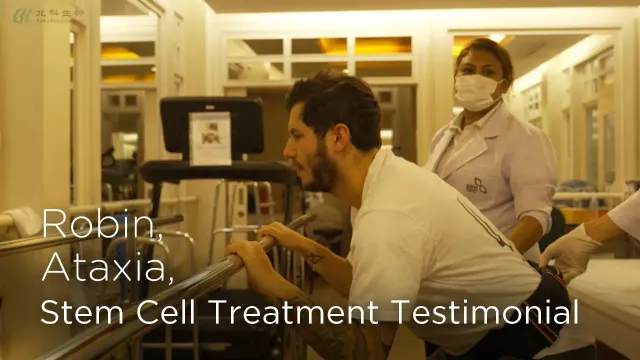
Robin and his family were in shock when he was diagnosed with Ataxia at only 16 years old of age. The first symptoms were shaking, walking imbalance, and difficulties in speaking. After researching online his mom came across our Youtube videos and decided that Beike could be the hope to improve Robin’s quality of life. After a successful first stem cell treatment in 2018, Robin and his mom agreed to sit with us and share the dramatic improvements he has experienced and what made them decide to come back in March 2022.
Stem cell treatment involves the injection of immature stem cells that are basically the origin of all the cells within our bodies. Stem cells can differentiate into different cell lines, therefore replacing degenerating and damaged cells – as is the case in hereditary ataxias – with healthy ones from a healthy donor. Stem cells can differentiate into lots of cell lineages including skin, bone, hair, cartilage, neurons, muscles, fat cells, liver, etc.
In the case of ataxias and other neurological disorders, they also offeradditional neuroprotection, i.e. preventing the already-ongoing process of neurological degeneration through (7):
Secreting neuro-trophic factors that promote nervous cell proliferation and differentiation
Modulating your immune system – thereby reducing the ongoing neuro-destructive process
Promoting vascular supply to the nervous system
Reducing free radicals and reactive oxygen species production that could have detrimental effects on the nervous system
Given the proven benefits of stem cell therapy in multiple conditions, including many genetic disorders, many studies have aimed to test the efficacy of stem cell treatment in the most common forms of hereditary ataxia that lack a curative therapy – namely Spinocerebellar ataxia and Friedreich’s ataxia.
In patients with hereditary ataxias, stem cell therapy has proven to (7, 8, 9):
Stop, or at least delay, disease progression
Prevent cerebellar and neural degeneration
Restore normal nervous tissue architecture
Improve motor skills, balance, and coordination
Improve nervous tissue functioning and normal activity – with better alertness and less fatigue
Reduce pain
Improve the immune system
Reduce the risk of developing malignancies in some forms of ataxia including ataxia-telangectasia
In general, stem cell therapy is well-tolerated in people with ataxia, with minimal side effects that are easily managed and rarely cause significant problems. You should be able to see a palpable improvement after around a mere two weeks of stem cell transplantation.
Additionally, results from stem cell therapy are usually life-long and provide prolonged and innumerable benefits that are difficult to obtain through conventional treatment methods that require multiple modalities because each drug usually target one aspect of the disease. This doesn’t in any way say that stem cell therapy can be used as a single treatment modality since we still recommend physiotherapy and other forms of treatments in our center, but it simply states the possible advantages of stem cell therapy over conventional modalities.
Few conventional treatment options are available for patients diagnosed with ataxia, which mostly focus on alleviating the symptoms. None of them are actually treating the loss of neurological function caused by cell degeneration in the cerebellum, brain stem and/or spinal cord. Stem cells have the ability to regenerate injured cells in the body, helping to reduce/reverse the symptoms and allowing ataxia patients to improve.
Possible improvements after Stem Cell Therapy for Ataxia
The purpose of our stem cell treatment is to restore neurological function in the brain/spinal cord lesion area, thus, various kinds of improvement are possible after our treatment and our past patients have experienced the following*:
Based on follow-up reports from 143 patients across 413 forms, here is the percentage who self-reported any improvement after treatment.
Symptom
% of Patients who noticed Improvement
% who noticed a Small Improvement
% who noticed a Moderate Improvement
% who noticed a Significant Improvement
Speech (babbling for infants)
83%
27%
29%
27%
Drooling
83%
33%
30%
20%
Swallowing
83%
36%
26%
22%
Fine hand movements
79%
43%
23%
12%
Memory
78%
27%
28%
23%
Muscle stiffness
77%
37%
23%
18%
Coordination
76%
37%
28%
11%
Weight loss
75%
22%
31%
22%
Control of movement
75%
35%
25%
15%
Tremors
75%
31%
26%
18%
Fatigue
74%
32%
24%
17%
Sleep disturbance
74%
28%
23%
23%
Balance
74%
39%
22%
13%
Low mood or anxiety
72%
33%
17%
22%
Cognitive impairment
72%
33%
16%
22%
Walking
68%
34%
21%
13%
Patients self-assess each symptom on a 5-point scale (Worse / No improvement / Small / Moderate / Significant) at follow-up checkpoints after treatment, comparing to their pre-treatment baseline. "Reported improvement" combines the small, moderate and significant buckets. Data is updated daily from our internal patient registry. As with any medical treatment, past results do not guarantee future outcomes — improvements vary from patient to patient.
Do you feel as though your stem cell treatment has improved the quality of life?
No
24%
Yes - has slightly improved
33%
Yes - has moderately improved
27%
Yes - has significantly improved
17%
% of patients with some level of positive result
76%
Are you currently experiencing any improvements in your general physical condition?
No
22%
Yes - small improvements
37%
Yes - moderate improvements
26%
Yes - significant improvements
15%
% of patients with a positive level of satisfaction
78%
Are you currently satisfied with the outcome of the treatment?
No
17%
No comment
9%
Somewhat satisfied
35%
Yes
40%
% of patients with ongoing improvements
75%
*It is important to remember that improvements experienced by patients diagnosed with hereditary ataxias may not be permanent, as stem cell treatments do not currently have any influence on the genetic origin of these specific types of ataxia. In such cases, periodic treatments may be required to keep a stable condition. Finally, as for any medical treatment, improvements cannot be guaranteed.
Our Treatment Program in Details
Beike is unlike any other stem cell treatment provider in the world, the reason? Since 2005, we have been developing and optimizing our stem cell treatment protocols with the concept that only a very comprehensive solution can allow our patients to truly benefit from stem cells.
We believe that stimulation through various therapies is necessary to enhance stem cell regenerative response, therefore our protocols include daily therapies to support the stem cells. Finally, we provide a wide variety and large quantities of stem cells in order to adapt to each patient specific condition and deliver maximized regenerative potential.
Our ataxia treatment consist in 6 to 8 simple and minimally invasive injections of umbilical cord derived stem cells. The stem cells are transplanted using two separate methods: by intravenous way using a standard IV drip system, and through intrathecal injection performed after lumbar puncture. These two delivery methods allow for increased efficacy while ensuring safety and minimum inconvenience for the patient.
01 15 to 23 Days Stay
02 IV & Intrathecal Injections
03 UCBSC / UCMSC Cells
04 Daily Therapy Program
05 120-400 Million Cells
06 Nutrition Program
Frequently Asked Questions
A.
In order to delve into this treatment modality in ataxia, we first need to explain what exactly we mean when we say “ataxia”. Ataxia is when you have muscle coordination problems. It is basically when you lose control of coordinating your own voluntary muscles. You might see yourself as clumsy or ungraceful; but this might actually be one symptom of your ataxia presentation (1, 2).
A.
Ataxia has numerous causes – with multiple classification systems being present. However, cause-wise, ataxia can be classified into (1, 2):
Hereditary Ataxias
These include different forms of ataxia that are inherited vertically along generations. They occur due to genetic mutations/aberrations transmitted from parents to children. Inherited ataxias are usually characterized by prolonged and slower disease progression compared to sporadic forms of ataxia. There are different modes of inheritance for ataxia; including:
Autosomal dominant: Having one affected parent puts the child at risk of developing ataxia. One of the most widely known autosomal dominant ataxias includes Spinocerebellar Ataxia
Autosomal recessive: This mode requires both parents to be disease carriers, or one carrier and one diseased, in order to transmit the disease to the offspring. Some of the widely autosomal recessive forms of ataxia include Friedreich’s Ataxia and Ataxia Telangectasia.
Mitochondrial inheritance: This mode precludes a 100% risk of disease presentation if the mother is affected, and 0% if the father is the affected person. It occurs due to point mutations within the mother’s mitochondrial DNA which is exclusively transmitted to her offspring. Some ataxias in this category include Myoclonic Epilepsy with Ragged Red Fibers (MERRF) and Mitochondrial Encephalomyopathy.
Sporadic Ataxias
These include different ataxia presentations in the absence of family history. This form is usually diagnosed preliminarily until a hereditary cause is found. It is usually due to affection of one of the three systems concerned with balance and coordination – namely the cerebellum, the vestibular system (within the inner ear), and the proprioceptive sensory pathway. According to whether or not we know the exact cause of this cause of ataxia, we can divide sporadic ataxias into either:
Idiopathic ataxia (Also known as idiopathic late-onset cerebellar ataxia (ILOCA)): This form occurs due to reasons that are still unknown to us. It usually occurs in older ages ranging from 50s to 70s.
Acquired ataxia: Acquired forms of ataxia usually occur due to diseases affecting the cerebellum – the main brain areas concerned with balance and proper coordination mentioned before. Some causes include:
Strokes involving the cerebellum or brain stem
Multiple Sclerosis
Cerebellar tumors
Cerebellar Infections
Creutzfeldt–Jakob disease
Vitamin deficiencies such as vitamin B1 and B12
Hypothyroidism
Excessive alcohol intake
A.
When it comes to treating ataxia, treatment mainly depends on the exact cause of ataxia. For example, if one’s ataxia is due to stroke, then we manage the stroke and the ataxia consequently improves. If it is due to nutritional deficiency, then we supplement the deficient nutrient, and we see improvement in ataxia as well.
We still don’t have a “curative” treatment for hereditary or idiopathic ataxias (i.e. Primary ataxias). In hereditary ataxias, doctors usually recommend physiotherapy and occupational therapy for better muscle control and in coping with the condition. Symptomatic treatments are usually used as well to alleviate symptoms depending on the main complaint. For example, if you are complaining of urinary incontinence, bladder relaxants are prescribed, and so on. Sometimes, neuroprotective drugs are used as well to delay disease progression, similar to their use in other neurological disorders, such as:
Riluzole: This drug is also commonly used in amyotrophic lateral sclerosis (ALS). It works by reducing the production of neuro-toxic substances and delaying disease progression.
Varenicline: Commonly used for smoking cessation
Amantadine: Also used in Parkinson’s disease
Baclofen: This is a muscle relaxant that could help in muscle spasticity and pain associated with ataxia.
However, even with all the current medical advancements, there is still not a single curative treatment for hereditary ataxias, and the drugs listed above are merely supportive and still have limits to their efficacy as well as possible side effects due to the need for a life-long use (2, 5, 6).
Many are now probably thinking “So where does stem cell therapy come in all of this?” Well, to be honest, not all forms of ataxia could probably benefit from this form of therapy; however stem cell therapy has proven to have excellent results in people with primary forms of ataxia – i.e. those not due to a secondary/acquired cause. This is because primary forms of ataxia usually result from immune destruction, and degeneration, of brain areas concerned with equilibrium.
A.
Autosomal dominant and autosomal recessive ataxias are hereditary ataxias, and spinocerebellar ataxia (SCA) and Friedreich’s ataxia (FRDA) are the most common forms of hereditary ataxia. Autosomal dominant genes express themselves when present. Autosomal recessive genes will only express themselves when in the homozygous state — i.e., both genes in the gene pair are the recessive gene form. Thus, recessive genes can be “carried” by those whose phenotype does not exhibit the gene characteristic, while dominant genes cannot be “carried”. Therefore, generally autosomal dominant ataxias are easier to express and at a higher morbidity than autosomal recessive ataxias.
A.
Purkinje cells are a type of neuron found in the cerebellar cortex, at the base of the brain. They are among the largest neurons and are responsible for most of the electrochemical signaling in the cerebellum. The Purkinje cells and the cerebellum are essential to the body’s motor function. Disorders involving the Purkinje cells usually negatively affect the patient’s movements.
A.
Ataxia might be a solitary presentation or might be part of a larger set of symptom presentations. Therefore, good awareness of different etiologies and syndromes of ataxia is quite important for proper diagnosis and management. Most types of ataxia have these symptoms in common (2, 4):
Poor movement coordination
Regression of fine motor skills (such as buttoning your shirt or using cutlery)
Loss of balance while walking and adopting a wide-based gait to compensate for this lack of balance and due to fear of falling
Speech and swallowing problems
Eye muscle coordination problem (ex. Nystagmus which is involuntary eye movement)
A.
Most people don’t know what cerebellar ataxia is and may overlook the early symptoms. Anyone with progressive gait disorder or imbalance should be evaluated by a neurologist. MRI is recommended in all cases. If a treatable cause is not discovered, a gene test should be done. In about 60 percent of the cases, the gene test will determine the type of ataxia.
A.
As previously mentioned, there are multiple classifications for different forms of ataxias according to how exactly we look at it. For example, ataxia can be classified according to (1):
Etiology/Cause: As we discussed, it can be hereditary or sporadic.
Disease onset: Acute (progresses over hours to days), sub-acute (progresses over weeks), or chronic (progresses over months to years).
Brain distribution: There might be a focal (localized) cause such as ataxias due to strokes or tumors; or symmetric/generalized affection such as in case of cerebellar infection, drug-intoxication, metabolic causes (such as vitamin deficiencies and hypothyroidism), or hereditary ataxias.
There are many diseases manifesting with ataxia, either as a primary symptom or as part of a larger syndrome. However for the sake of being concise, we will briefly mention some of the most commonly encountered diseases associated with ataxia. Other forms of ataxias are present of course; yet most of them are due to a primary cause, i.e. Acquired ataxia, and treating that cause usually leads to improvement of ataxia (2, 3).
Spinocerebellar Ataxia (Previously known as dominantly-inherited ataxias): This type is the most common dominantly inherited ataxia. In this type, an affected family member is usually present on taking family history and people with this form usually present during adulthood. There are more than 40 types of spinocerebellar ataxias, each presenting with a unique predominant symptom depending on the affected gene. For example, in addition to the previously mentioned symptoms, people with spinocerebellar ataxia could have additional muscle stiffness and pain, loss of hand and feet sensation, reduced bladder control, and problems with memory and language.
Friedreich’s Ataxia: This is the most common type of recessively inherited ataxias, i.e. needing at least both parents to be carriers of the genetic mutation responsible for this disease. It typically manifests prior to the age of 25, and we most commonly see it in older children – older than 5 – and adolescents younger than 15. People with this form of ataxia usually have additional findings including slurred speech, diabetes, reduced hearing or vision, abnormal spine curvature (scoliosis), and progressive leg weakness. If not treated early, this type could cause the affected person to become wheel-chair ridden by the age of adulthood
Ataxia-telangectasia: Similar to Friedreich’s ataxia, but rarer in incidence, this type is another autosomal recessive hereditary ataxia. It typically begins manifesting during childhood and it commonly has rapidly deteriorating symptoms with people with this condition often having shorter life spans. People with this type often have characteristic telangectasias – i.e. visible clusters of blood vessels on the skin – and often have higher risk of developing cancers.
Medically reviewed by
Dr. Dina Mohyeldeen
Physician & Medical Researcher
Dr. Dina M. is a physician with particular interest in researching advancements in treating different incurable conditions. Her fields of interest include cancers, neurological, and psychiatric conditions given their difficult diagnoses and ever-evolving treatment modalities.
Find out more about patients previously treated with Beike stem cell protocols. The families participating in these blog posts talk about their stories and present their own view of the treatment, including thoughts regarding the daily therapies, the stem cell injection themselves as well as improvement noticed during and after treatment.
7.Tsai YA, Liu RS, Lirng JF, Yang BH, Chang CH, Wang YC, et al. Treatment of Spinocerebellar Ataxia With Mesenchymal Stem Cells: A Phase I/IIa Clinical Study. Cell Transplantation . 2017;26(3):503-12. https://www.ncbi.nlm.nih.gov/pmc/articles/PMC5657707/
8.Bakhtiar S, Woelke S, Huenecke S, Kieslich M, Taylor AM, Schubert R, et al. Pre-emptive Allogeneic Hematopoietic Stem Cell Transplantation in Ataxia Telangiectasia. Frontiers in Immunology . 2018;9:2495. https://www.ncbi.nlm.nih.gov/pmc/articles/PMC6215822/
10.Bhartiya M, Kumar A, Singh RK, Radhakrishnan DM, Rajan R, Srivastava AK. Mesenchymal Stem Cell Therapy in the Treatment of Neurodegenerative Cerebellar Ataxias: a Systematic Review and Meta-analysis. The Cerebellum . 2023;22:363–369. https://link.springer.com/article/10.1007/s12311-022-01403-6