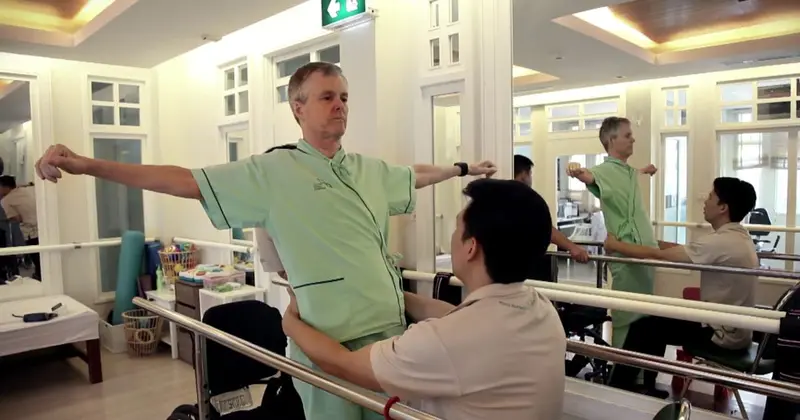
Stem cells delivered intrathecally — directly into the spinal canal where the lesion is — paired with intensive rehabilitation. See how patients regained function. 58% reported quality-of-life improvement.
66% satisfied with the treatment outcome.
Are you considering Stem Cell Treatment for Spinal Cord Injury?
Spinal cord injury is a debilitating condition affecting the spinal cord that has limited curative treatment options, with most only focusing on alleviating the present symptoms and improving daily functionality. Stem Cell Treatment however offers hope, with studies showing stem cell therapy can slow or stop the progression of spinal cord injury.
Read on to see if Spinal Cord Injury Stem Cell Treatment might be right for you.
Narine spent 3 months in a coma and 7 years with no use of her lower limbs due to a tragic car accident that left her with a spinal cord injury and minor traumatic brain injury.
Thanks to the combination of stem cells and a revolutionary new epidural electrode stimulation device from Medtronic, Narine is now able to control her legs and support herself. Narine is the first woman to receive this device, the 5th ever, and the first person to undergo this unique stem cell + implant treatment.
How does stem cell treatment for spinal cord injury work?
Mesenchymal stem cells (MSC) have shown great potential for the treatment of spinal cord injuries due to their differentiation potential, immunomodulatory properties, secretion of growth factors and cytokines, migration and integration capabilities. MSCs secrete a variety of growth factors and cytokines that can promote nerve growth, including nerve growth factor (NGF), brain-derived neurotrophic factor (BDNF), and glial cell line-derived neurotrophic factor (GDNF).
Stem cells can also induce the expression of neurotrophic factors, which are proteins that promote the growth and survival of neurons. Through promotion of angiogenesis, MSCs promote the formation of new blood vessels, which can provide oxygen and nutrients to support nerve growth.
How Stem Cell Therapy Improves Spinal Cord Injuries
Stem cells are cells that are “pluripotent”, meaning they can differentiate into all other cells due to their self-renewing abilities. They can develop into ectodermal (ex. skin and some neurological structures), mesodermal (ex. bones, cartilage, and blood cells), or endodermalcells (ex. cells of internal body organs). Therefore, injecting stem cells should theoretically allow them to differentiate and “replace” the damaged neurons due to cord injury (1). However, following extensive testing of stem cell treatment on SCI patients, it has proven to have additional benefits other than tissue replacement; including (7):
Replacing and repairing the damaged neurons: This is their original function; to replace the damaged tissue by conversion of one cell type to another.
Increasing the production of neurotrophic factors that promote nervous cell proliferation and differentiation (ex. glia derived neurotrophic factor (GDNF) and brain-derived neurotrophic factor (BDNF))
Modulating the immune system and the ongoing inflammatory process – thereby reducing the ongoing neurodestructive process due to SCI
Promoting vascular supply to the nervous system through stimulating the generation of new blood vessels (neovascularization/angiogenesis)
Increasing survival of damaged neurons: Stem cells can prevent apoptosis/automated cell death; therefore promoting cell survival and improving recovery.
Possible Improvements after Stem Cell Therapy for Spinal Cord Injury
Based on follow-up reports from 87 patients across 199 forms, here is the percentage who self-reported any improvement after treatment.
Symptom
% of Patients who noticed Improvement
% who noticed a Small Improvement
% who noticed a Moderate Improvement
% who noticed a Significant Improvement
Upper limb muscle tone
73%
40%
22%
12%
Trunk muscle strength
73%
42%
18%
13%
Trunk muscle tone
70%
41%
17%
13%
Upper limb strength
70%
29%
25%
15%
Upper limb sensation
66%
33%
17%
16%
Trunk sensation
62%
35%
17%
10%
Control of body temperature
60%
35%
16%
9%
Sweating
59%
35%
12%
12%
Fine motor control
59%
43%
7%
9%
Skin condition
58%
20%
18%
20%
Fatigue
56%
30%
19%
8%
Lower limb muscle tone
55%
32%
17%
6%
Pain
50%
26%
18%
6%
Lower limb strength
49%
28%
15%
7%
Lower limb sensation
47%
30%
9%
8%
Bladder control
37%
21%
13%
3%
Sexual function
36%
27%
8%
2%
Bowel control
36%
21%
11%
4%
Patients self-assess each symptom on a 5-point scale (Worse / No improvement / Small / Moderate / Significant) at follow-up checkpoints after treatment, comparing to their pre-treatment baseline. "Reported improvement" combines the small, moderate and significant buckets. Data is updated daily from our internal patient registry. As with any medical treatment, past results do not guarantee future outcomes — improvements vary from patient to patient.
Do you feel as though your stem cell treatment has improved the quality of life?
No
42%
Yes - has slightly improved
41%
Yes - has moderately improved
14%
Yes - has significantly improved
4%
% of patients with some level of positive result
58%
Are you currently experiencing any improvements in your general physical condition?
No
27%
Yes - small improvements
43%
Yes - moderate improvements
23%
Yes - significant improvements
7%
% of patients with a positive level of satisfaction
73%
Are you currently satisfied with the outcome of the treatment?
No
21%
No comment
13%
Somewhat satisfied
41%
Yes
25%
% of patients with ongoing improvements
66%
*It is important to remember that as for any medical treatment, improvements cannot be guaranteed. Please contact us for more information regarding the possible improvements for a particular case.
Benefits of Stem Cell Therapy in Spinal Cord Injury
The purpose of stem cell therapy is to promote the healing of the original injury in order to restore neurological function. Thus, various kinds of improvement are possible after our treatment. Our past patients have experienced the following among others*:
Improve motor strength and power
Improve muscle tension
Improve sensation
Improve self-care capacity
Pain Reduction
Decreased spasticity
Increase sweating function
Our Treatment Program in Details
Since 2005, we have been developing and optimizing our stem cell treatment protocols with the concept that only a very comprehensive solution can allow patients with spinal cord injury to truly benefit from stem cells. We believe that stimulation through various therapies is crucial to enhance stem cell regenerative response. Therefore our protocols include a daily therapy program to support the stem cells.
We provide a wide variety and large quantities of stem cells in order to adapt to each patient-specific condition and deliver maximized regenerative potential for our patients.
Our stem cell therapy program for spinal cord injury consists of 6 to 8 simple and minimally invasive injections of umbilical cord-derived stem cells. The stem cells are transplanted using intravenous injection and through intrathecal injection performed after lumbar puncture. These two delivery methods allow for increased efficacy while ensuring safety and minimum inconvenience for the patient.
01 15 to 23 Days Stay
02 IV & Intrathecal Injections
03 UCBSC / UCMSC Cells
04 Daily Therapy Program
05 120-400 Million Cells
06 Nutrition Program
Frequently Asked Questions
A.
The spinal cord is the long tube of nerves extending from the brain down to the level of the lower back. It is basically the wires our brains use to control our bodies. Spinal cord injuries (SCIs) usually occur following traumas, for example, due to motor vehicle crashes or recreational activities in younger people; however, they could also occur due to falls in elderly individuals (1).
These injuries mostly occur when parts of the vertebrae surrounding the cord are fractured or dislocated. This causes direct bruising or tearing within the spinal cord – and the connection is either partially or totally severed. Spinal injuries usually cause significant physical and psychological impairment that could lead to permanent functional disability and a reduction of the quality of life of affected individuals (2).
A.
The degree of neurological impairment due to SCI is usually determined 72 hours following the insult. Patients reach most of their healing capacity by 3 months, and any improvement usually plateaus by 9-12 months (2).
Sequelae or permanent consequences of SCI usually depend on the level of cord injury; where it usually follows the rule “the higher the injury, the worse the outcome”.They also depend on whether the cord was injured totally or partially; and if partially, then which neurological tracts were injured (ex. sensory versus motor versus both). Injuries to the spinal cord can present with a diversity of symptoms, and people with similar injuries could recover differently depending on many factors. However some of the possible long-term consequences of SCI include:
Loss of body sensation below the level of injury: The side affected depends on the type of sensation (ex. temperature versus positional sensation) as well as degree and level of injury.
Neuropathic pain: Some people might not totally lose sensation of their bodies; but might experience chronic pain or numbness/tingling sensations. They might also perceive normal sensations abnormally, or feel pain from as little as a light touch.
Loss of voluntary muscle movements: Depending on the level of the injury this might manifest as paraplegia (loss of lower body movement) or quadriplegia (loss of control over all four limbs).
Muscle weakness: This is the less severe form of loss of motor function.
Muscle spasticity: This might exacerbate the present neuropathic pain.
Bowel and/or bladder dysfunction: People with SCI might develop difficulty in controlling their bowel or bladder movements.
Breathing problems: In case of higher injuries (i.e. cervical or thoracic injuries)
A.
Current treatments offered for SCI are symptomatic and solely aim to prevent further damage of the spinal cord due to the encountered trauma. For example, acute management of SCI involves:
Spinal cord immobilization: This is an important initial step in management since it can prevent any further spinal cord injury for example due to vertebral fracture fragments. Immobilization can be done through using neck collars for the cervical spine and a spinal board for the rest of the back.
Surgical management: Surgical decompression early on after the injury – especially within 72 hours of injury - might also prevent further nerve damage due to vertebral fracture or herniation, or due to the trauma-induced inflammation surrounding the spinal cord. The vertebral column is repaired, and any spinal cord compression is removed (3, 4).
Corticosteroids: Some studies have also report benefits of using steroids in improving functioning if used early on within 8 hours of injury – though its role is controversial due to possible risk of infections during such a vulnerable period (4).
Rehabilitation programs: These programs include early psychological support, physiotherapy, dietary support, occupational therapy, etc. All of these aim to improve functionality and provide patients with the best possible outcomes out of their present condition (5).
Despite there being constant advancements in diagnostic techniques for SCI to allow for faster interventions and better outcomes of cord injuries, and in developing better rehabilitation programs to improve survival and the quality-of-life of SCI patients; treatment itself has remained the same – with most current modalities focusing on preventing further damage to the nerves and stabilizing the patients’ conditions rather than restoring what has been damaged (2, 6).
However, we will now discuss how stem cell therapy has been emerging as a new hope for patients with SCI due to its promising regenerative abilities.
A.
There are many types of stem cells to use in different conditions including embryonic stem cells, mesenchymal stem cells, hematopoietic stem cells, neural stem cells, as well as many other sources.
However, the most widely tested type in SCI, that has shown clinical benefit, is the mesenchymal origin. And even within the mesenchymal stem cell line, there are multiple sources including the bone marrow, the umbilical cord, and the adipose/fat tissue; with the cell lines with proven clinical benefits on patients with SCI only being the bone marrow and umbilical cord samples (7, 9).
A.
At Beike Biotechnology, we use umbilical cord stem cells - umbilical cord-related mesenchymal samples donated from healthy mothers after a normal birth.
A.
There has been lots of variation in the time used in clinical trials for stem cell transplantation after SCI; however they have all reached one consensus that stem cell transplantation should be done as early as possible to prevent further nerve damage due to inflammation and to allow optimum recovery of the injured nerves.
Optimum timing of 1-2 weeks after the injury has been suggested to provide the best results (7, 9); though multiple trials have administered stem cells after that time window with positive benefits being reported – with even some showing benefits in people with chronic SCI (> 1 year).
Given the impracticality of this time window following such a significant injury, which could be associated with other non-neurological complications, we would usually suggest an optimum time window of around three months following the injury – as used by most clinical trials reporting clinical benefit (8, 10).
Despite our recommendations – supported by clinical data – and our best efforts to provide the optimum medical service, we still need to advise that clinical benefit is not 100% guaranteed.
A.
No treatment is without complications, and stem cell therapy for spinal cord injury is the same. However, despite its novelty, stem cell therapy has limited side effects if used properly, with comparable side effects to those experienced with regular blood transfusion or foreign organ transplantation (ex. allergic reactions, cell rejection, or fever). Other side effects that have been reported through data analysis include pain, muscle spasms, and some gastrointestinal disturbance. However, most clinical trials report milder side effects that can be managed and rarely lead to premature treatment cessation (11).
When it comes to response to treatment, we will hereby summarize different factors that might affect your loved one’s response to stem cell therapy, and how we at Beike Biotechnology address each factor to ensure that we provide you with the highest efficacy using the safest procedure possible.
Dose/Number of stem cells: The higher the dose of stem cells – within limits of course – the better the response. At Beike Biotechnology, we administer an optimum dose of around 120-400 Million Cells (depending on the child’s weight).
Route/Method of administration: Studies have shown that intrathecal injection (through lumbar puncture directly within the brain’s CSF) provides a better response than the traditional intravenous route (which causes stem cells to go to other organs than the brain before reaching the brain). At Beike Technology, we use both intravenous and intrathecal routes concomitantly in order to obtain maximal efficacy; while ensuring the least possible side effects or toxicity.
Timing of treatment: As previously mentioned, the earlier the stem cell therapy, the better the benefit. We recommend therapy within the first three months – i.e. before the end of the tissue recovery process.
Type of Stem Cells Used: As previously mentioned, umbilical cord-based mesenchymal stem cells, which we use at Beike Technology, have better-proven efficacy in SCI compared to other types of stem cells.
Follow-up Time: Significant benefits from stem cell therapy begin appearing around three months after stem cell therapy, and most people reach their full potential around 6-12 months after treatment. At Beike Technology, even after discharge, we provide you with a full follow-up program beginning as early as one month and up to one year after transplantation. You have complete access to our professional team even after you leave our center.
Medically reviewed by
Dr. Dina Mohyeldeen
Physician & Medical Researcher
Dr. Dina M. is a physician with particular interest in researching advancements in treating different incurable conditions. Her fields of interest include cancers, neurological, and psychiatric conditions given their difficult diagnoses and ever-evolving treatment modalities.
Find out more about patients previously treated with Beike stem cell protocols. The families participating in these blog posts talk about their stories and present their own view of the treatment, including thoughts regarding the daily therapies, the stem cell injection themselves as well as improvement noticed during and after treatment.
2.Alizadeh A, Dyck SM, Karimi-Abdolrezaee S. Traumatic Spinal Cord Injury: An Overview of Pathophysiology, Models and Acute Injury Mechanisms. Frontiers in neurology. 2019;10:282. https://www.ncbi.nlm.nih.gov/pmc/articles/PMC6439316/
3.Li Y, Walker CL, Zhang YP, Shields CB, Xu XM. Surgical decompression in acute spinal cord injury: A review of clinical evidence, animal model studies, and potential future directions of investigation. Frontiers in biology. 2014;9(2):127-36. https://www.ncbi.nlm.nih.gov/pmc/articles/PMC4041293/
4.Sandean D. Management of acute spinal cord injury: A summary of the evidence pertaining to the acute management, operative and non-operative management. World journal of orthopedics. 2020;11(12):573-83. https://www.ncbi.nlm.nih.gov/pmc/articles/PMC7745491/
6.Nandoe Tewarie RS, Hurtado A, Bartels RH, Grotenhuis A, Oudega M. Stem cell-based therapies for spinal cord injury. The journal of spinal cord medicine. 2009;32(2):105-14. https://www.ncbi.nlm.nih.gov/pmc/articles/PMC2678281/
7.Gao L, Peng Y, Xu W, He P, Li T, Lu X, et al. Progress in Stem Cell Therapy for Spinal Cord Injury. Stem Cells International. 2020;2020:2853650. https://pubmed.ncbi.nlm.nih.gov/33204276/
8.Silvestro S, Bramanti P, Trubiani O, Mazzon E. Stem Cells Therapy for Spinal Cord Injury: An Overview of Clinical Trials. International Journal of Molecular Sciences [Internet]. 2020; 21(2). https://www.mdpi.com/1422-0067/21/2/659
11.Shang Z, Wang M, Zhang B, Wang X, Wanyan P. Clinical translation of stem cell therapy for spinal cord injury still premature: results from a single-arm meta-analysis based on 62 clinical trials. BMC Medicine. 2022;20(1):284. https://bmcmedicine.biomedcentral.com/articles/10.1186/s12916-022-02482-2
How it works
A clear path forward
From your first inquiry to post-treatment follow-up —
we guide you every step of the way.
Stage
01
Inquiry
Tell us about your condition. Speak with our medical advisors — no obligation.
Stage
02
Evaluation
Our doctors review your medical records and recommend a tailored protocol.