


Stage
01
Inquiry
Tell us about your condition. Speak with our medical advisors — no obligation.
Hundreds of children with cerebral palsy have improved spasticity, balance, speech and motor control through our two-week protocol. 90% reported quality-of-life improvement. 87% satisfied with the treatment outcome.
Published Last updated
For those living with cerebral palsy, the search for effective treatments has often been met with limited options focused solely on symptom management. Stem cell therapy offers a revolutionary alternative—targeting the root causes of cerebral palsy by repairing damaged brain cells and promoting regeneration. This cutting-edge approach offers improved functionality and a better quality of life.
Could this innovative therapy be the solution you’ve been looking for? Read on to explore the possibilities.
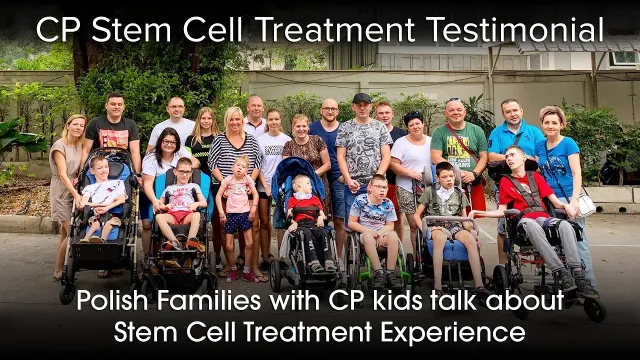
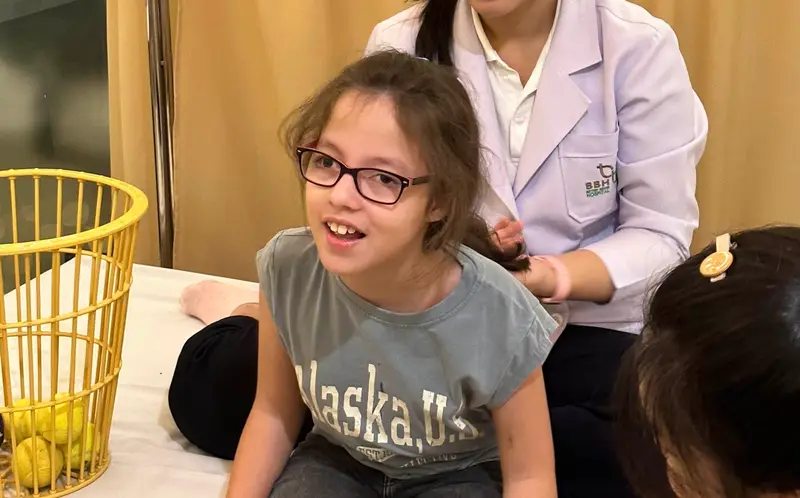
After a successful first stem cell treatment in Thailand in 2019, six young people with cerebral palsy travelled again from Poland for a second round of stem cells and supporting therapies. The families agreed to sit with us and tell us more about the improvements they have noticed so far and the treatment experience in general.
Watch more videosCerebral palsy (CP), also first known as Little’s disease, is the most common cause of physical disability in children. It affects 2 to 3 children out of every 1000 live births.
Despite the current lack of a curative treatment, with the majority of treatments only providing limited benefit (1, 2), stem cell therapy has been emerging as a novel yet effective treatment for CP; with it possibly reversing some of the original brain damage incurred during brain maturation (3, 4, 5).
Stem cell therapy has been shown to benefit at least 85% of CP patients treated, with the best improvement being seen in muscle tone, and almost half of the patients showing moderate to significant neurological improvement (5, 6). Cerebral Palsy is actually one of several conditions that have been scientifically proven to respond positively to stem cell treatment as we will discuss.
Stem cell treatment involves the injection of immature stem cells that are basically the origin of all the cells within our bodies. Stem cells can differentiate into different cell lines, therefore replacing degenerating and damaged cells – such as the oligodendrocytes in cerebral palsy – with healthy ones from a healthy donor. Stem cells can differentiate into lots of cell lineages including skin, bone, hair, cartilage, neurons, muscles, fat cells, liver, etc. (3).
In the case of CP and other neurological disorders, they also offer additional neuroprotection, i.e. preventing the already-ongoing process of neurological degeneration through (3, 11):
The efficacy of stem cell transplantation reaches as high as 85% - which is a dramatic improvement from the currently-used treatments. It can repair and stop the ongoing neurological destructive process, and it might even reverse the original brain insult responsible for CP. Stem cells have proven benefits in improving (4, 5):
Although stem cell therapy provides significant benefits in CP as mentioned, it should still be used in combination with other treatment modalities including physiotherapy; psychiatric therapy; and speech therapy – all of which are available at Beike Technology – in order to achieve the highest possible response out of treatment.
Stem cell therapy has limited side effects if used correctly, with comparable side effect risks to those associated with regular blood transfusion (ex. allergic reactions or fever).
Also, given that this might be a difficult decision to make, and you might need to weigh the benefits versus risks prior to starting this journey, we will discuss with you different factors that might affect your child’s response to stem cell therapy, and how we at Beike Technology address each factor to ensure that we provide you with the highest efficacy using the safest procedure possible (7, 12).
The purpose of the treatment is to promote healing of the original brain injury in order to restore neurological function. Thus, various kinds of improvement are possible after our treatment. The majority of Cerebral Palsy patients that have been treated by Beike, utilizing the combination of stem cell therapy and rehabilitation, showed visible signs of improvements, especially for these symptoms*:
Based on follow-up reports from 256 patients across 640 forms, here is the percentage who self-reported any improvement after treatment.
| Symptom | % of Patients who noticed Improvement | % who noticed a Small Improvement | % who noticed a Moderate Improvement | % who noticed a Significant Improvement |
|---|---|---|---|---|
| Trunk muscle strength | 88% | 34% | 34% | 21% |
| Head control | 88% | 31% | 31% | 25% |
| Range of movement | 86% | 34% | 34% | 18% |
| Spasticity | 84% | 37% | 31% | 16% |
| Limb muscle strength | 84% | 38% | 26% | 20% |
| Appetite | 83% | 27% | 24% | 33% |
| Involuntary movements | 79% | 38% | 27% | 14% |
| Swallowing | 78% | 33% | 22% | 23% |
| Speech (babbling for infants) | 77% | 38% | 23% | 16% |
| Mood disorder | 77% | 31% | 26% | 20% |
| Balance | 73% | 36% | 27% | 10% |
| Learning disability | 72% | 36% | 22% | 13% |
| Drooling | 69% | 30% | 22% | 18% |
| Standing up | 59% | 28% | 22% | 8% |
| Bladder control | 56% | 24% | 13% | 20% |
| Walking | 53% | 25% | 14% | 14% |
| Crawling | 46% | 24% | 15% | 8% |
Patients self-assess each symptom on a 5-point scale (Worse / No improvement / Small / Moderate / Significant) at follow-up checkpoints after treatment, comparing to their pre-treatment baseline. "Reported improvement" combines the small, moderate and significant buckets. Data is updated daily from our internal patient registry. As with any medical treatment, past results do not guarantee future outcomes — improvements vary from patient to patient.
| No | 11% |
| Yes - has slightly improved | 40% |
| Yes - has moderately improved | 23% |
| Yes - has significantly improved | 27% |
| % of patients with some level of positive result | 90% |
| No | 12% |
| Yes - small improvements | 39% |
| Yes - moderate improvements | 29% |
| Yes - significant improvements | 20% |
| % of patients with a positive level of satisfaction | 88% |
| No | 4% |
| No comment | 9% |
| Somewhat satisfied | 34% |
| Yes | 54% |
| % of patients with ongoing improvements | 87% |
*It is important to remember that as for any medical treatment, improvements cannot be guaranteed. Please contact us for more information regarding the possible improvements for a particular case
Beike is unlike any other stem cell treatment provider in the world, the reason? Since 2005, we have been developing and optimizing our stem cell treatment protocols with the concept that only a very comprehensive solution can allow our patients to truly benefit from stem cells. We believe that stimulation through various therapies is necessary to enhance stem cell regenerative response, therefore our protocols include daily therapies to support the stem cells. Finally, we provide a wide variety and large quantities of stem cells in order to adapt to each patient’s specific condition and deliver maximized regenerative potential.
Our stem cell therapy program for cerebral palsy consists of 6 to 8 simple and minimally invasive injections of umbilical cord-derived stem cells. The stem cells are transplanted using two separate methods: by intravenous way using a standard IV drip system, and through intrathecal injection performed after lumbar puncture. These two delivery methods allow for increased efficacy while ensuring safety and minimum inconvenience for the patient.

Medically reviewed by
Dr. Dina Mohyeldeen
Physician & Medical Researcher
Dr. Dina M. is a physician with particular interest in researching advancements in treating different incurable conditions. Her fields of interest include cancers, neurological, and psychiatric conditions given their difficult diagnoses and ever-evolving treatment modalities.
Find out more about patients previously treated with Beike stem cell protocols. The families participating in these blog posts talk about their stories and present their own view of the treatment, including thoughts regarding the daily therapies, the stem cell injection themselves as well as improvement noticed during and after treatment.
Patients and their families talking about treatment, recovery and the changes that mattered most to them.
From your first inquiry to post-treatment follow-up —
we guide you every step of the way.
Tell us about your condition. Speak with our medical advisors — no obligation.
Our doctors review your medical records and recommend a tailored protocol.
Receive specialized stem cell therapy at our partner hospital, fully supervised.
We stay in touch and monitor your progress for the months that follow.
No obligation. We’ll review your situation and respond within 48 hours.
Reviewed by the Beike medical advisory team — answering patient inquiries since 2005.